Water Features That Serve Multiple Property Needs
Pond and Lake Construction in Pell City for landowners adding water retention, livestock support, or recreational features to acreage
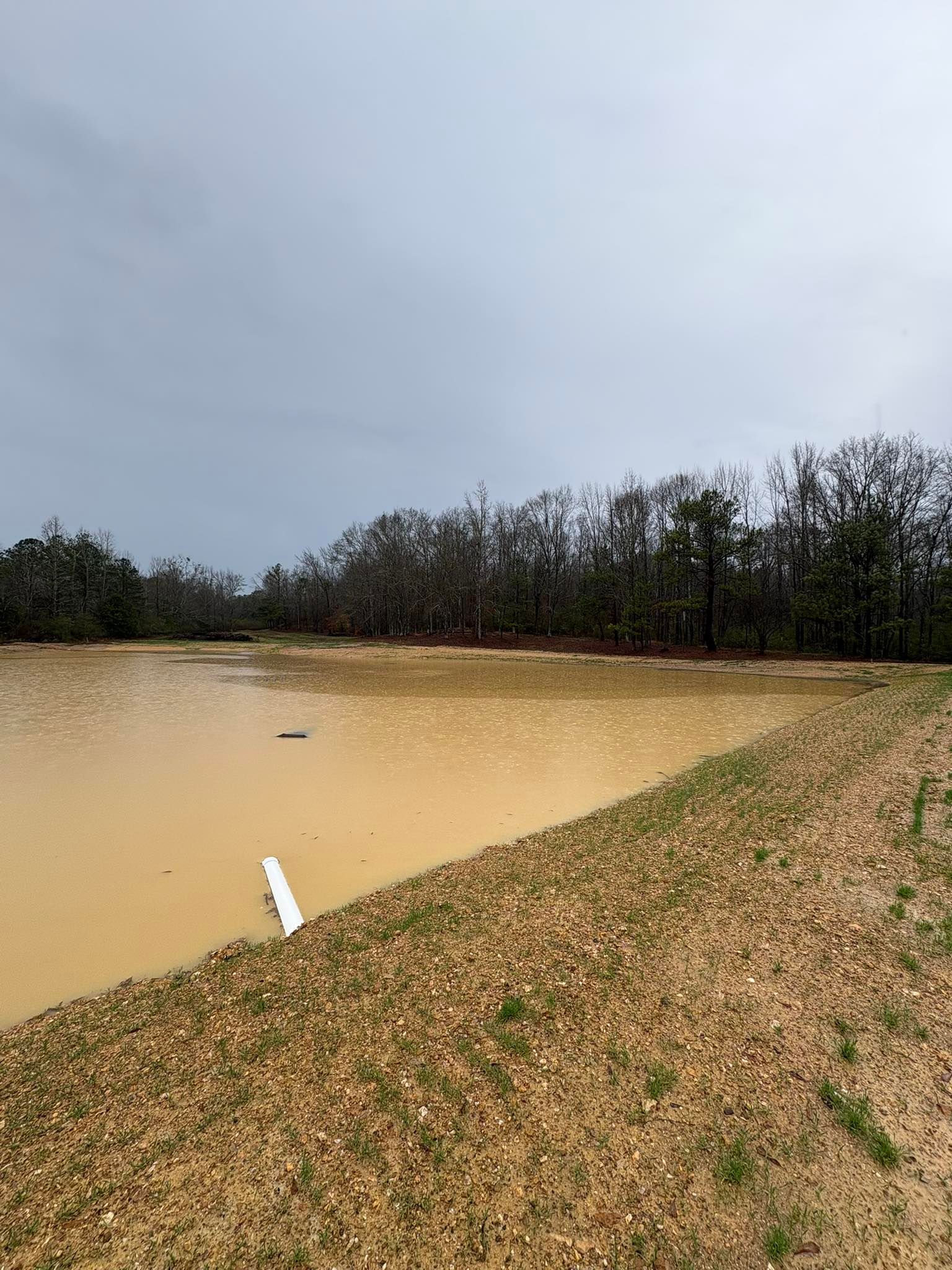
Large-scale excavation projects that create ponds or expand existing water features require equipment capable of moving significant volumes of earth while shaping basins that hold water reliably through seasonal fluctuations. Cheaha Land Management handles pond construction throughout Pell City and surrounding areas for properties where water retention supports livestock, recreation, irrigation, or habitat development. The excavation process involves removing topsoil and subsoil to reach clay or other impermeable layers that prevent seepage, shaping the basin with sloped sides that resist erosion, and using the excavated material to build berms or level adjacent areas.
Pond construction improves property function by providing consistent water access for livestock, creating fishing and wildlife habitat, and controlling drainage by capturing runoff before it causes erosion elsewhere on the property. Expanding an existing pond involves deepening the basin to increase capacity, extending the shoreline to reach areas with better water retention, or repairing eroded banks that have lost their original profile over time.
Schedule a property evaluation to assess soil conditions, drainage patterns, and excavation requirements for your pond project.
What You Notice Once Excavation Is Finished
Pond excavation succeeds when the basin reaches layers of soil that hold water without excessive seepage, the side slopes remain stable under wave action and animal traffic, and the overflow area directs excess water safely away from structures or erosion-prone areas. The depth and shape of the basin determine whether the pond maintains adequate volume during dry periods and whether aquatic life can survive temperature extremes. Grading around the pond establishes safe access points for livestock and equipment while directing surface runoff into the basin rather than around it.
After construction, you'll have a water feature that fills naturally from rainfall and runoff, maintains depth through seasonal changes, and provides reliable access for livestock or irrigation without requiring hauled water or off-property sources. The pond supports recreational fishing and wildlife use because the basin depth and shoreline habitat create conditions where aquatic species thrive. Properties throughout eastern Alabama benefit from pond construction because the region's clay soils generally retain water well once the basin is properly excavated and shaped.
The service includes excavation, grading, and shaping but does not typically include stocking fish, installing aeration systems, or ongoing pond management unless arranged separately. Sites with sandy or permeable soils may require clay liner installation or synthetic liners to prevent seepage, which increases project cost and complexity. Permits may be required depending on pond size, location relative to streams or wetlands, and local regulations governing water retention structures.
What Property Owners Usually Ask
Landowners considering pond construction want to know how excavation affects the surrounding property and what conditions ensure the pond functions as intended.
What soil conditions determine whether a pond will hold water?
Clay or other impermeable soil layers prevent water from seeping out of the basin, so excavation must reach these layers and avoid sandy or gravelly soils that allow rapid drainage.
How deep should a pond be for livestock and recreation?
Depths of at least eight to ten feet in the center allow fish to survive winter temperatures and provide adequate volume during dry periods, while shallower edges allow safe livestock access.
When is expanding an existing pond better than building a new one?
Expansion makes sense when the current pond location has proven water retention but lacks capacity, or when seasonal drying indicates the basin needs additional depth to maintain volume year-round.
What happens to the dirt removed during pond excavation?
Excavated material is typically used to build berms around the pond, level nearby areas for access or structures, or spread across low-lying sections of the property to improve drainage and usability.
Why does slope matter for pond bank stability?
Gradual slopes resist erosion from wave action and livestock traffic better than steep banks, which collapse into the pond over time and reduce capacity while creating muddy, unstable access areas.
Cheaha Land Management provides pond and lake construction services for residential, agricultural, and recreational properties across the region where water features add functional value. Call (256) 252-2603 to discuss your project requirements and receive an estimate based on site-specific excavation and grading needs.