Infrastructure That Reaches Every Part of Your Property
Trenching and Waterline Installation in Oxford for properties requiring utility access, water service expansion, or drainage system improvements
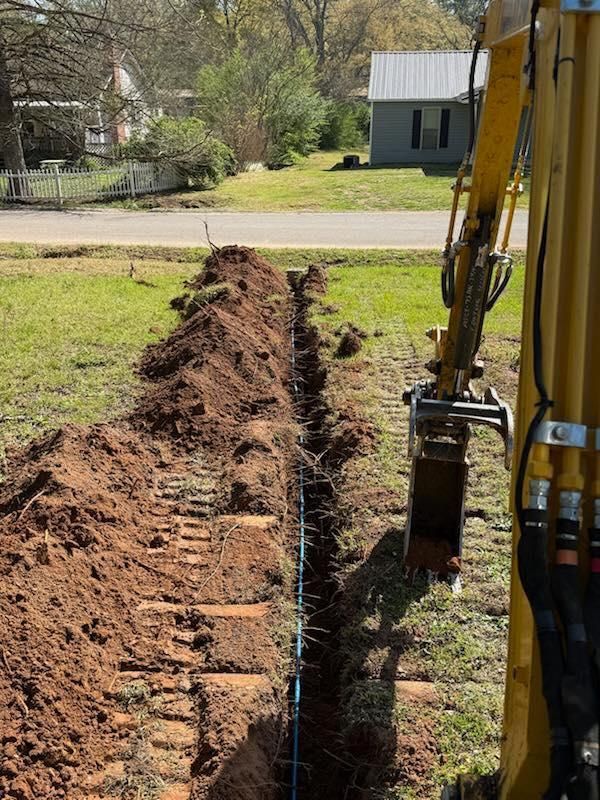
Rural properties throughout Oxford and surrounding areas often lack water service to outbuildings, livestock areas, or building sites located away from existing utility connections. Trenching services from Cheaha Land Management address this by excavating routes for waterlines, drainage pipes, and utility conduits that extend infrastructure to areas where wells, barns, workshops, or homesites require access. The process involves planning trench routes that avoid obstacles, minimize surface disruption, and maintain proper slope for gravity-fed drainage or pressure-fed water delivery.
Equipment designed for both small utility trenches and larger excavation projects allows work to proceed efficiently across varied terrain, including wooded areas, pastures, and developed yards. Trenches are excavated to depths that protect lines from frost damage and surface loads while maintaining the grade needed for proper system function. Backfilling is completed in layers with compaction at intervals to prevent settling that could damage the installed lines or create surface depressions.
Arrange an on-site consultation to identify utility routes and discuss excavation requirements for your property.
How Trenching Addresses Underground Utility Access
Waterline installation involves more than digging a trench and laying pipe—the trench depth must account for frost line depth in the region, the route must avoid crossing existing utilities or root zones of mature trees, and the slope must ensure water pressure remains consistent or drainage flow occurs without pooling. For gravity-fed drainage systems, even a few inches of elevation change over a long run affects whether water clears properly or backs up during heavy rain.
After installation, you'll have functional water access at barns, workshops, or building sites that previously required hauling water or running temporary lines. The trench route remains stable because backfill was compacted in lifts rather than dumped in loosely, which prevents the surface from sinking months later and exposing the line. Properties with livestock benefit from reliable water delivery to pasture areas without relying on ponds or seasonal streams that may dry out.
The service includes excavation, pipe laying, and backfilling but does not include plumbing connections inside structures or well drilling, which are handled by licensed plumbers and well contractors. Properties with rocky soil or high water tables may require specialized excavation methods or alternate routing to avoid conditions that complicate trenching. Drainage systems are designed based on site-specific slope, soil type, and anticipated runoff volume.
Answers to Frequent Service Questions
Property owners scheduling trenching work often want to understand what happens during excavation and how routes are planned to avoid complications.
What determines the depth of a utility trench?
Trench depth depends on frost line depth in the region, the type of utility being installed, and the need to avoid damage from surface loads such as vehicles or equipment crossing above the line.
How is the trench route planned to minimize surface disruption?
Routes are selected to avoid mature trees, existing utilities, structures, and areas where surface restoration would be difficult, such as paved surfaces or established landscaping. GPS and utility locating services confirm safe excavation paths.
When is trenching required instead of surface installation?
Trenching is necessary when lines must be protected from freezing, surface damage, or visual obstruction, or when gravity flow requires burial to achieve proper slope between the origin and destination points.
What equipment handles both small and large excavation projects?
Compact excavators work in confined areas near structures, while larger machines handle long trenches across open land where speed and depth capacity matter more than maneuverability.
Why does backfill compaction matter for long-term trench stability?
Compacted backfill prevents settling that creates surface depressions and exposes lines to damage, which is especially important under driveways, pastures, or areas where equipment operates regularly.
Cheaha Land Management provides trenching and waterline installation for residential, farm, and commercial properties across eastern Alabama where infrastructure expansion is needed. Contact the office to discuss your utility installation project and receive a detailed estimate based on site conditions.